
Custom Packaging Mistakes to Avoid: 7 Costly B2B Pitfalls & How to Fix Them
Ordering custom paper packaging — or switching to a new international manufacturing partner — shouldn't feel like a gamble. Here is how to prevent dieline fit failures, screen-to-press color shifts, cracked fold lines, and transit damage before bulk production starts.
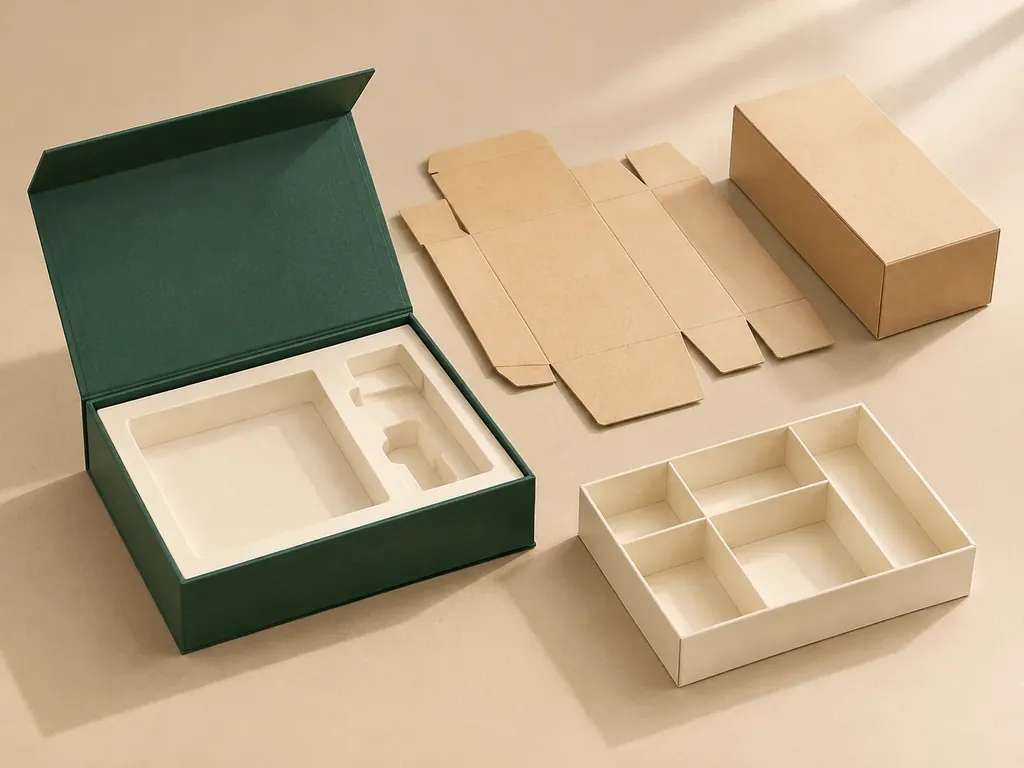
Across thousands of B2B custom packaging runs for cosmetics, jewelry, apparel, and e-commerce brands, the same costly frustrations appear again and again: boxes that are three millimeters too tight for the bottle inside, signature brand colors that shift from warm champagne to muddy brown on press, dark folding cartons that crack along the crease lines, or rigid gift boxes that arrive with crushed corners and inflated ocean freight invoices.
Every one of these failures is 100% preventable when addressed at the specification and structural dieline stage rather than after bulk printing plates are mounted. Below, we break down the seven most expensive custom packaging mistakes to avoid, explain the structural and printing physics behind each buyer concern, and share the exact engineering solutions our team at Pakelux uses to protect international shipments to the US, UK, EU, Canada, and Australia.
1. Dieline & Internal Fit Failures: Confusing Outer vs. Inner Dimensions
The single most common mistake in custom paper packaging happens before a printing plate is ever made: specifying box dimensions based on the external measurement rather than the usable internal cavity, or measuring a product with zero tolerance for material thickness and finger clearance.
When you design a folding carton using 350 GSM ivory board (~0.45 mm caliper), wall thickness barely alters the interior cavity. However, when you move to an E-flute corrugated mailer box (1.5–1.8 mm wall thickness, with double-folded side walls taking up 6–8 mm of internal width) or a luxury V-grooved rigid box built from 1200–1500 GSM greyboard (~1.5–2.0 mm per wall plus micro-velvet or paperboard insert walls), ignoring board caliper guarantees that your product will either jam during fulfillment or rattle loose in transit.
How to Engineer Zero-Guesswork Box Sizing & Insert Tolerances
- Always specify Internal Dimensions (ID) in
L × W × H(mmorinches): In packaging engineering, Length (L) is the opening panel left-to-right, Width (W) is front-to-back depth, and Height (H) is top-to-bottom vertical depth. Never approve a quote without confirming that the numbers represent interior usable space. - Primary Cosmetic & Skincare Folding Cartons: Add
+1.5 mm to +2.0 mm(~1/16 in) per axis over the rigid glass bottle or pump jar diameter so automated or hand packing moves smoothly without bowing the carton flaps. - Corrugated E-commerce Mailer Boxes: Add
+3.0 mm to +5.0 mm(~1/8 to 3/16 in) on Length and Width to clear the double-locked side walls and front dust flaps. - Die-Cut Paperboard & Velvet-Lined Inserts: Design the cavity
-0.5 mmsnug for soft foam or micro-velvet slots holding rings or dropper bottles, and+0.5 mm to +1.0 mmfor rigid paperboard inserts and trays so products lift out cleanly without tearing the board collar. - Ship physical product samples for custom insert fitting: Whenever your SKU has an irregular silhouette (such as a tapered perfume flacon, cosmetic dropper, or multi-piece gift set), send the physical containers or verified 3D CAD measurements so the structural engineer can test-fit a white dummy sample before cutting production steel-rule dies.
2. Color Shifts Between Screen and Press: RGB Artwork, Substrate Tint & Lamination Impact
A second high-anxiety pain point for brand founders and creative directors is opening a bulk carton only to discover that a signature forest green, pastel blush, or warm metallic gold looks noticeably duller or warmer than it appeared on a calibrated monitor.
This discrepancy occurs for three technical reasons:
- RGB vs. CMYK / Pantone (PMS) Gamut Mismatch: Backlit monitors emit light in RGB, capable of displaying neon and ultra-saturated hues that standard 4-color CMYK process inks physically cannot reproduce on paper fibers.
- Base Paper Whiteness & Ink Absorption: Uncoated natural kraft paper absorbs liquid ink into its porous fibers and adds a warm brown undertone, making light inks appear 15–25% darker and warmer. Conversely, smooth 300–400 GSM double-coated C2S art paper keeps pigment sitting cleanly on a bright white clay-coated surface for razor-sharp contrast.
- Post-Press Lamination Optical Shift: Applying a protective film after printing subtly alters light reflection. Gloss lamination deepens blacks and boosts color saturation, whereas soft-touch matte lamination diffuses surface reflection, softening contrast by 5–8% and giving dark palettes a velvety, muted architectural look.
How to Lock In Predictable Brand Colors Across Runs
- Use Pantone (PMS) Spot Colors for Brand-Critical Solids: If your packaging relies on an exact signature background color or wordmark, specify a Pantone Solid Coated (
C) (for coated art board and laminated boxes) or Pantone Solid Uncoated (U) (for natural kraft or textured specialty paper) ink rather than relying on a 4-color CMYK build. - Use White Ink Underbase on Natural Kraft: When printing pastel, white, or bright brand graphics onto brown kraft mailers or paper bags, request a white ink underbase beneath the colored artwork so the brown substrate does not muddy the hue.
- Approve a Laminated Wet Proof or Pre-Production Sample: Never judge final color from an unlaminated digital printout. Always evaluate your pre-production sample with the exact matte or soft-touch film applied under natural daylight (
D50 / D65) lighting.
3. Cracking Fold Lines, Scuffed Matte Surfaces & Bleeding Foil Stamping
Nothing undermines a luxury unboxing experience faster than white paper fibers cracking open along the folded edges of a dark-colored carton, rub marks appearing across a matte black box during fulfillment, or hot foil stamping bridging into an unreadable metallic blob on small typography.
Cracking happens when thick paperboard (350–400 GSM) printed with heavy ink coverage is scored and folded against the paper grain without a flexible surface film to hold the outer coating together. Scuffing happens when standard uncoated or unlaminated dark ink rubs against cardboard dividers during ocean or parcel transit. Foil bridging happens when metallic foil is stamped onto ultra-fine serif fonts (< 0.25 mm stroke width) or deep linen-textured specialty paper at excessive heat or pressure.
Engineering Fixes for Flawless Surface Finishing
- Pair Heavy Dark Coverage with Film Lamination: Any folding carton, matte coated art-paper envelope mailer, or boutique shopping bag featuring dark solid ink coverage across crease lines should include matte lamination, gloss lamination, or anti-scratch soft-touch lamination. The BOPP film stretches across the 90-degree or 180-degree fold, preventing fiber cracking.
- Align Score Creases Parallel to Paper Grain: Experienced packaging factories orient the dieline layout on the parent sheet so the primary structural fold lines run parallel to the paper grain direction, reducing folding resistance and keeping box flaps crisp rather than springy.
- Follow Minimum Stroke & Gap Rules for Hot Foil & Embossing: Keep hot foil stamping lines at least
0.25 mm(0.7 pt) thick with at least0.4 mmclearance between reversed letters. When combining 3D embossing with champagne gold foil stamping, use registered brass dies on smooth double-coated art paper or fine-grain specialty wrap so the metallic edge stays surgical and sharp.
4. Crushed Corners, Transit Damage & Volumetric Shipping Surprises
A box that looks museum-grade on a studio table is still a commercial failure if 8% of your shipment arrives dented at your 3PL warehouse in Los Angeles, Felixstowe, Rotterdam, or Sydney — or if your air/sea freight invoice costs more than the boxes themselves.
B2B buyers frequently run into two opposing logistics traps: under-specifying flute strength for DTC parcel mailers shipped via USPS, UPS, Royal Mail, or DHL, or shipping large fully assembled rigid boxes across oceans at 100% volumetric cubic meter (CBM) volume.
How to Balance Transit Protection with Landed Freight Efficiency
- Match Flute & Greyboard Caliper to Payload Weight: For DTC e-commerce mailers under
1.5 kg(3.3 lbs), high-density 32 ECT / 200# E-flute corrugated board delivers sleek printability and crush resistance. For heavier multi-bottle kits (1.5–4.0 kg), upgrade to B-flute or double-wall structures paired with custom corrugated grid dividers. - Use Collapsible Magnetic Rigid Boxes for Large-Format Gift Sets: When your rigid box exceeds
220 × 160 × 70 mm(8.5 × 6.3 × 2.8 in), consider a collapsible (fold-flat) magnetic rigid box. Collapsible rigid structures cut shipping volume by 65% to 75%, often saving more on international freight than the unit cost of the box itself. - Specify Export-Grade Master Cartons: Insist on 5-ply double-wall K=K corrugated export master cartons, inner poly-bag moisture barriers (essential for ocean transit across humid equator routes), corner edge protectors, and carton weights under
15–18 kg(33–40 lbs) for safe warehouse handling.
5. Diagnostic Matrix: Common Buyer Pain Points vs. Engineering Solutions
Use this quick-reference matrix during your internal packaging review to verify that your RFQ specification addresses every high-risk failure mode before bulk production begins:
| Buyer Pain Point / Symptom | Root Technical Cause | Pakelux Engineering Prevention |
|---|---|---|
| Product fits too tightly or rattles inside box | Confusing outer vs. inner dimensions; ignoring 1.5–2.0 mm E-flute or greyboard wall thickness |
Specify exact Internal Dimensions (ID); test physical product inside a CAD-cut white sample before die tooling |
| Printed color looks duller or warmer than screen | Designing in RGB; printing directly on brown kraft or omitting lamination shift check | Convert artwork to CMYK + Pantone (PMS); add white ink underbase on kraft; approve laminated wet proof |
| White cracks appear along dark folded edges | Heavy ink coverage on 350+ GSM board folded without film lamination or against paper grain | Add matte, gloss, or anti-scratch soft-touch lamination; orient primary score lines with paper grain |
| Matte black boxes show rub/scuff marks in transit | Standard matte varnish or unprotected dark ink rubbing against master carton dividers | Upgrade to anti-scuff soft-touch matte film + individual tissue paper interleaving between packed units |
| Gold foil text looks blurry or fills in small letters | Stroke width < 0.25 mm or heavy foil pressure on deep-textured paper |
Maintain ≥ 0.25 mm line weight and ≥ 0.4 mm letter spacing; pair fine foil with smooth coated art paper |
| Ocean/air freight costs blow past budget | Shipping large non-collapsible rigid boxes at 100% volumetric CBM | Switch oversized gift boxes to fold-flat collapsible rigid structures or nest lid-and-base sizes |
| Sustainability claims questioned by UK/EU/US retailers | Vague eco marketing labels without verifiable material specs or plastic removal | Replace EVA/blister plastic trays with die-cut paperboard inserts; specify verifiable kraft/recycled/FSC paper per order |
6. Hidden MOQ Traps, Tooling Surprises & Lead-Time Bottlenecks
Many emerging and mid-sized brands hesitate to request custom quotes because they fear getting locked into a 10,000-unit minimum order quantity (MOQ), getting hit with surprise plate and cutting-die charges after paying a deposit, or missing a seasonal retail launch window due to opaque production schedules.
As we detail in our Low MOQ Custom Packaging Guide and Custom Packaging Cost Guide, packaging costs are driven by fixed setup costs (steel-rule cutting dies, offset printing plates, brass foil/embossing blocks, and press make-ready waste of 150–300 sheets) divided across your total unit volume.
How to Keep Budgets & Timelines 100% Transparent
- Request Itemized Tiered Quotes (e.g., 500 / 1,000 / 3,000 / 5,000 pcs): Seeing unit price alongside setup cost at multiple volume tiers lets you immediately see where the offset price break happens — and whether a short-run digital print test batch or a full offset run makes better financial sense.
- Separate Sampling Time from Mass Production Time: Build a realistic backward schedule from your launch date:
1–2 business daysfor structural dieline & 3D mockup;5–7 business daysfor physical pre-production samples;12–18 business daysfor bulk production of folding cartons, mailers, and paper bags (15–22 business daysfor hand-finished rigid boxes); plus international air or sea freight. - Never Skip Pre-Production Sign-Off on New Structures: Approving a physical sample adds one week upfront but eliminates 95% of downstream rework, dimension disputes, and fulfillment delays.
7. Frequently Asked Questions: Solving Custom Packaging Concerns
What if I don't have a structural dieline or packaging engineer on my team?
L × W × H), weight, and a reference photo of the box style you like via our Custom Packaging RFQ page. Our structural team generates a custom 2D CAD dieline template (.ai / .pdf) with clearly marked cut, crease, and bleed lines so your graphic designer can place artwork directly onto a verified template.How do I make sure my cosmetic jar or jewelry piece won't shift during shipping?
Why did my previous supplier's matte envelope mailer look like rough brown kraft paper?
Can I combine multiple SKUs or fragrance variants to reach the MOQ?
Related Packaging Guides
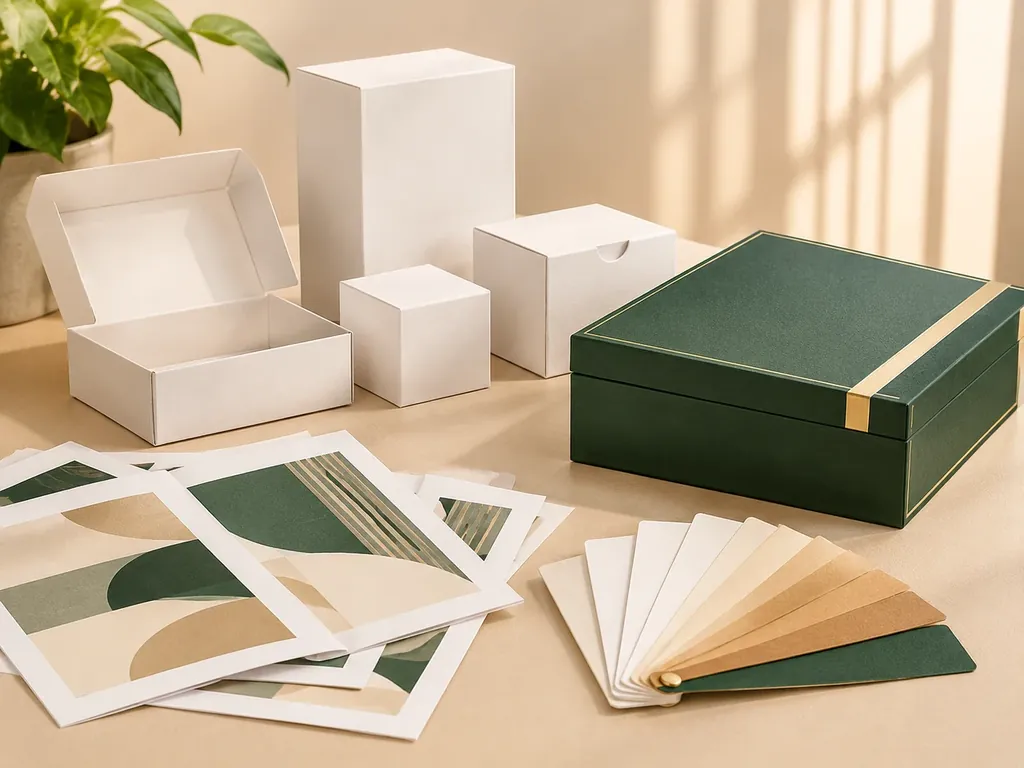
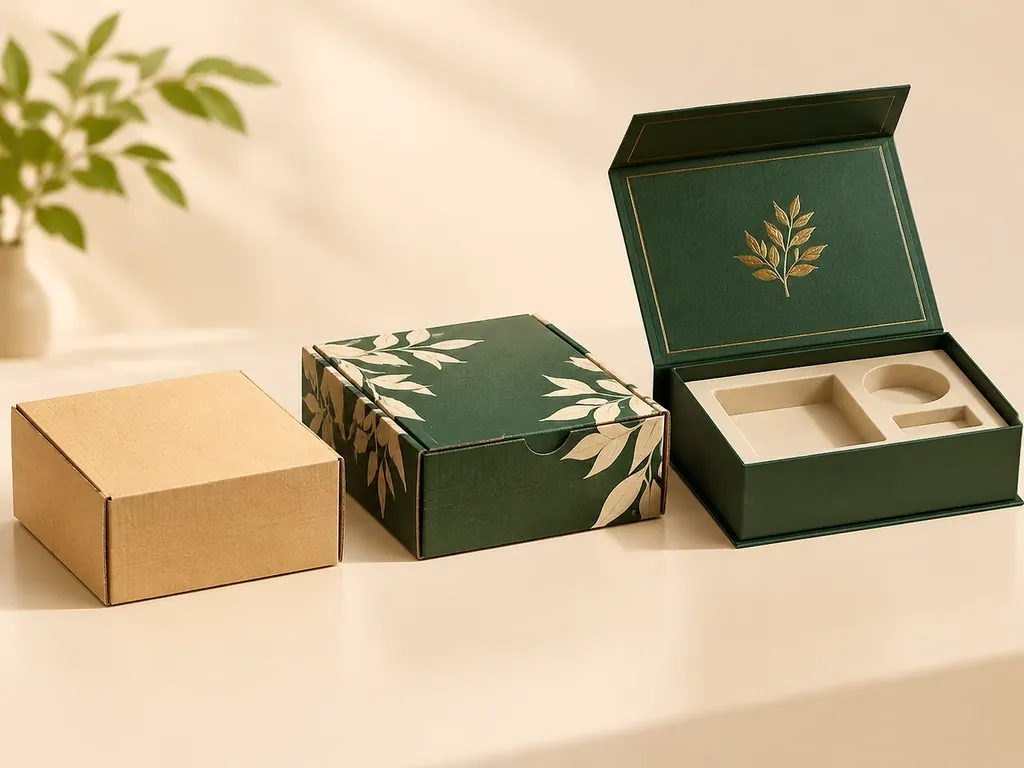

Want an engineering check on your packaging specs?
Send us your product dimensions, target quantity and artwork ideas — we'll recommend the right structure, board GSM and finish before you commit to tooling.